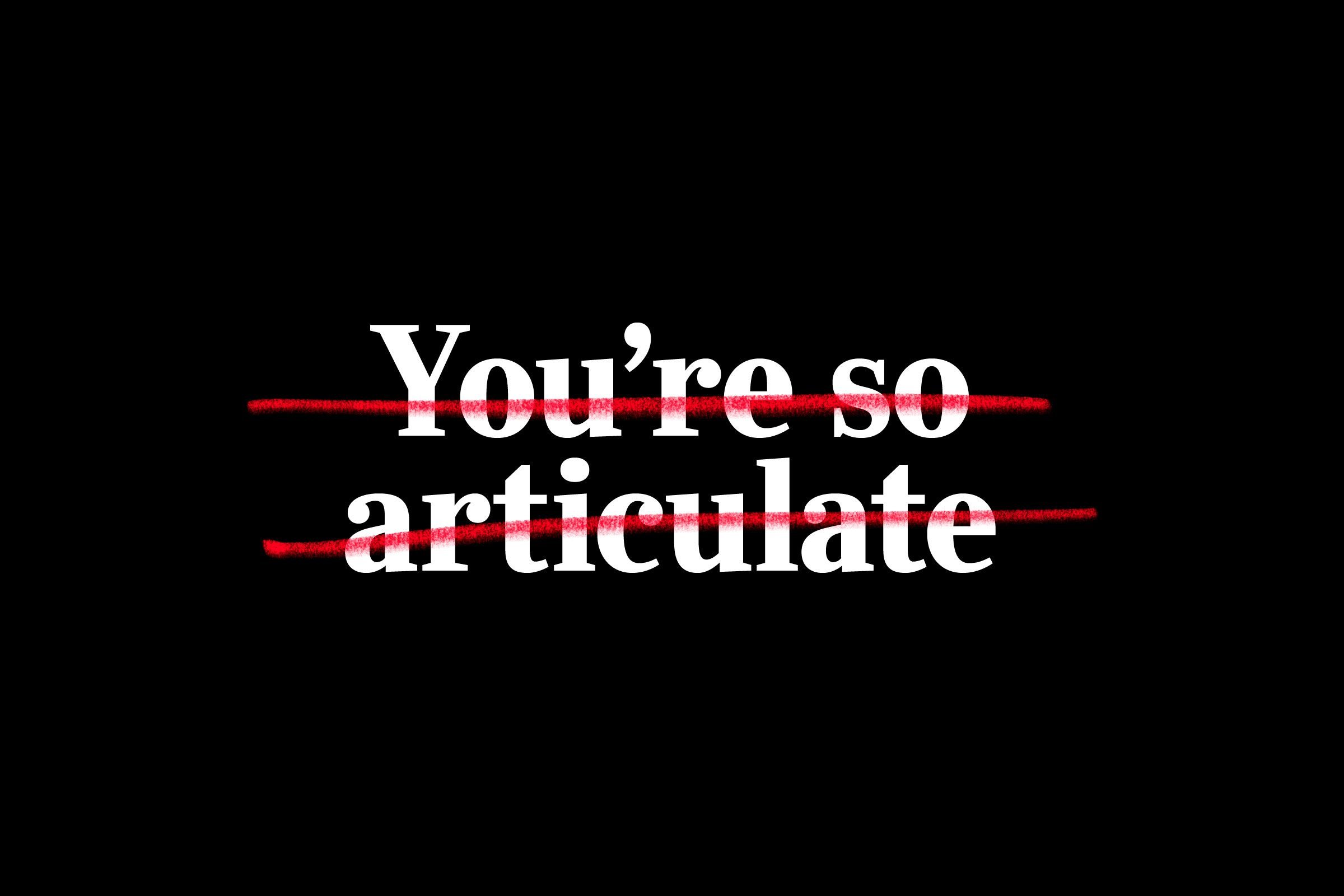
Photo from Readers Digest
“Wow, you’re truly so articulate!” Viewing this on a completely surface level it may seem like an unassuming compliment. But for many African Americans, it’s a phrase that sometimes stings. It implies surprise that a person of a darker complexion could speak clearly, professionally, or intelligently utilizing all the proper aspects of diction, syntax and what have you. These aren’t just awkward moments, they’re microaggressions, and they happen all too often. When it comes to African Americans in predominantly white spaces, microaggressions are a constant, exhausting backdrop. These small comments or behaviors, can often be brushed off as harmless or even unintentional, gradually begin to chip away at the mental health and self worth of African Americans. They shape how Black individuals navigate classrooms, boardrooms, and even casual social settings.These microaggressions are pervasive by their very nature. While some might argue that people are simply “too sensitive”, “too woke” or are reading too much into things, the cumulative effect of these small but ever so mighty slights is anything but miniscule. In an article from The American Psychology Association, microaggressions are defined as “... brief and commonplace daily verbal, behavioral, or environmental indignities, whether intentional or unintentional, that communicate hostile, derogatory, or negative racial slights and insults towards people of color.”
Microaggressions are like paper cuts one may not ruin your day, but a hundred of them can leave you feeling sort of raw. These slights, comments, or actions experienced daily with or without intentionality communicate derogatory or even dismissive messages toward groups that are marginalized. According to the American Psychology Association there are three main types of microaggressions starting with a microsassault which they define to be “... an explicit racial derogation character-ized primarily by a verbal or nonverbal attack meant to hurt the intended victim through name-calling, avoidant behav-ior, or purposeful discriminatory actions.”. This is what most people think of when discussing racism and is referred to by the APA as being “Old Fashioned”. Next up is Micro insults as defined by the APA “Microinsults represent subtle snubs, frequently unknown to the perpetrator, but clearly convey a hidden insulting message to the recipient of color.” Finally, we move onto microinvalidations, the APA defines them as “communications that exclude, negate, or nullify the psychological thoughts,feelings, or experiential reality of a person of color.” There will be some that argue that these incidents are no more than simple social misunderstandings or missteps and should not be looked at through such a harsh lens. What this doesn't account for is that it ignores a basic fundamental truth, regardless of intent the impact of said action is still felt. A white person may very well believe themselves to be friendly when commenting on an African American person’s hair and or speech, but oftentimes for the recipient of these comments, it’s another reminder that they’re being measured against a white standard. Ignoring microaggressions means ignoring the lived experience of Black Americans. And when left unchecked, this damage goes far beyond hurt feelings or awkward moments.

Photo from Harvard Business Review
Waking up in the morning and mentally preparing yourself for a day of small stabs is the reality of microaggressions. The health impact is real and with it comes real effects. According Brigitte A Davis “As a stressor, discrimination is a social determinant of health in its own right, getting “under the skin,” or embodied, through the direct physiologic impact of stress. Discrimination also exists within the larger social environment, impacting individuals’ health by denying them access to resources, dignity, and a high quality of life.” While some may not link discrimination and microaggressions together the two are one and the same. Microaggressions are a form of discrimination that can take a hefty toll on the physical and mental health of those on the receiving end. Davis then goes on to say “In a recent paper highlighting 29 reviews of empirical studies of discrimination based on race/ethnicity, my coauthors and I found that experiences of everyday discrimination were associated with depression, anxiety symptomatology, general psychological distress, and diagnosed psychiatric mental illness.” These findings bolster the belief that microaggressions are so much more than just a small comment, they have lasting effects on the communities that they are targeted towards that negatively impact them leading to a cascade of health issues and problems. It’s death by a thousand cuts. One student might brush off being told they’re “so lucky to be here on scholarship,” but imagine hearing that implication of not earning your place week after week. A Black employee might try to ignore being talked over in meetings or being asked to “tone it down,” but over time, these experiences erode confidence. Still, some skeptics say, “People need thicker skin.” But this argument reeks of privilege. Would those same critics feel comfortable being told they were “one of the good ones” every day, as if they were an exception to their race? Probably not.
It’s a constant calculation: adapt or be judged. And that’s exhausting. Many African Americans find themselves code-switching, modifying their behavior, speech, or appearance to align more closely with white norms just to be seen as “professional” or “approachable.” This performance of whiteness isn’t about shame; it’s about survival. The British Journal of Nursing published an article featuring a study that simulates microaggressions based on real-world student feedback, aimed to provide experiential learning opportunities for recognising and addressing microaggressions, focusing on race and age as marginalised groups.This study was done using a sample of second year nursing students. The journal found that “In both clinical environments and higher education institutions, it is crucial for health professionals to enhance their understanding of microaggressions and to reflect on incidents when they occur” the journal then went on to say “By bringing these behaviours to the individual's attention in a thoughtful and respectful way, teams can develop a more inclusive environment. Ignoring or dismissing microaggressions does not resolve the issue; rather, it perpetuates harm and can have a profound and negative impact on those affected” This furthering the belief that these microaggressions no matter the industry nursing, higher education etc. are better off being addressed as opposed to swept under the rug an minimized because when they are not addressed there are negative impacts on this communities.

Photo from LinkedIn
Microaggressions might seem small in isolation, but their weight adds up fast. They’re not just awkward moments or misunderstood jokes, they're daily reminders of the subtle ways racism seeps into everyday life. And for African Americans, especially in predominantly white spaces, these “paper cuts” become wounds that never quite heal. This isn’t about being too sensitive; it’s about acknowledging that these experiences are real, harmful, and far too common. By calling them out and creating space for honest conversation, we begin to shift the narrative. We stop asking people to toughen up and start asking why the cuts keep coming in the first place. That’s how change begins not with silence, but with truth.


No comments:
Post a Comment